TRS Bharat Editorial Team
Exports & Global Trade
Rice is not just a crop — it is one of the most actively traded agricultural commodities on the planet. India alone exports over 20 million tonnes of rice annually to more than 150 countries, making it the single largest rice exporter in the world. Behind every container that leaves an Indian port lies a meticulous chain of milling, grading, certification, packaging, and ocean logistics. Here's what really happens between paddy and port.
From Field to Mill — The First Critical Mile
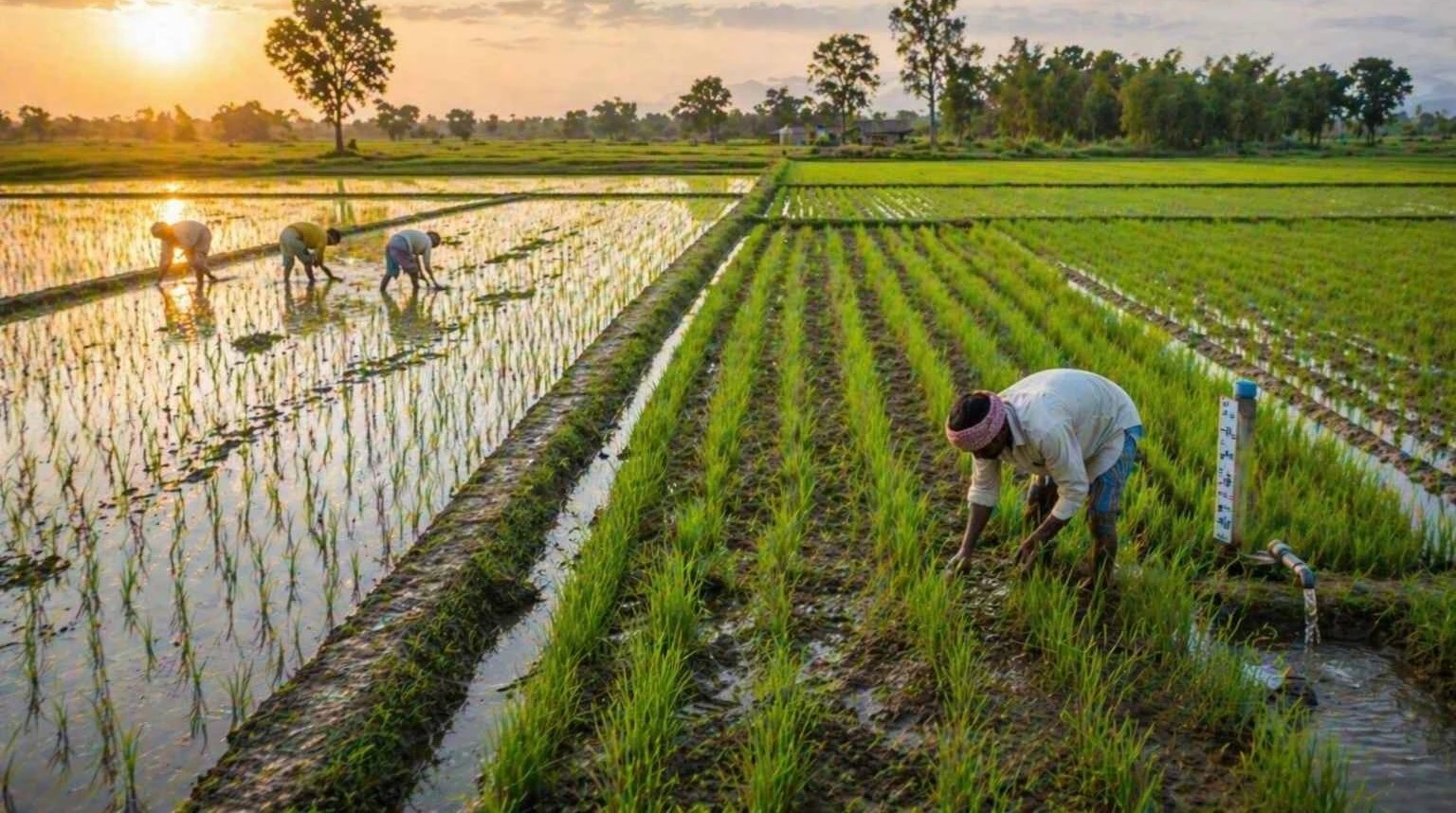
The export journey begins long before milling. Paddy is harvested at moisture levels of 20–22%, then quickly transported to drying yards where moisture is gently reduced to a stable 12–14% — high enough to preserve the grain's structure, low enough to prevent mold and pest infestation during storage. This drying stage alone separates premium exporters from commodity ones.
Dried paddy is then transported to modern rice mills, where it is cleaned, dehusked, polished (or kept brown), graded by length, sorted by color, and finally packaged. A well-run modern mill can process 4–10 tonnes per hour with grain-loss rates below 2%, producing brilliantly uniform rice that meets the world's strictest specifications.
Grading, Color Sorting & Quality Control
Export-grade rice is graded with surgical precision. After dehusking and polishing, grains pass through length graders that separate full grains from broken ones — a critical metric, since markets like the EU and the Gulf typically demand less than 5% brokens for premium Basmati, while parboiled markets accept up to 25% for value grades.
Optical color sorters then scan millions of grains per minute with high-resolution cameras and air-jet rejectors, removing discolored, yellow, black-tipped, or damaged grains in real time. The result is a visually impeccable product that meets the visual standards now expected by every major retail chain in Europe, North America, and the Middle East.
“What buyers really pay for is consistency. The same length, the same color, the same aroma, container after container, month after month. Quality is not a moment — it is a system.”
Certifications, Documentation & Phytosanitary Compliance
Every export shipment is accompanied by a stack of documentation that buyers and customs authorities verify rigorously. This typically includes the commercial invoice, packing list, certificate of origin, phytosanitary certificate (issued by the Indian Plant Quarantine authorities), fumigation certificate, weight certificate, quality and grading reports, and — for premium exports — laboratory analysis covering pesticide residues, aflatoxin, and heavy metals.
Buyers in the EU, Japan, and Australia enforce extremely tight MRLs (Maximum Residue Levels) on pesticide traces, often a small fraction of what is accepted domestically. Failing a single sample can lead to entire-container rejection at the destination port. Reputable exporters therefore test internally before shipment, work only with farms under audited input-control protocols, and maintain complete batch-level traceability from container to paddy.
Packaging — The Quiet Differentiator
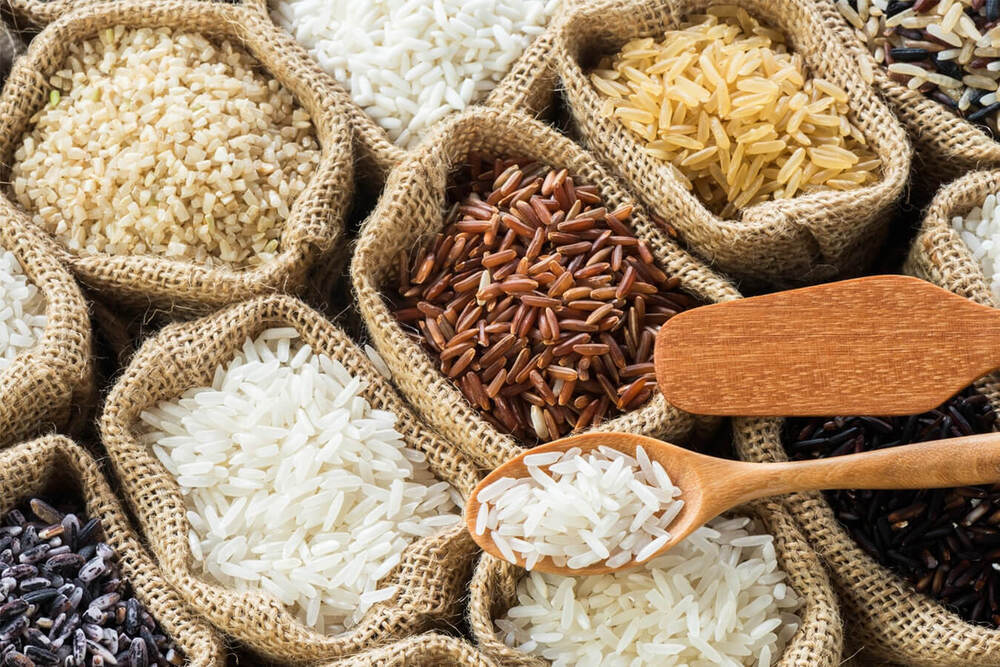
Rice packaging is far more sophisticated than it appears. Bulk shipments for industrial buyers typically use 25 kg or 50 kg polypropylene woven sacks with food-grade liners. Retail shipments use 1 kg, 5 kg, 10 kg, and 20 kg sizes in multi-layer laminated pouches, vacuum-packed jute, or premium cloth bags — each designed for shelf appeal, moisture protection, and pest resistance.
Modern export packaging is increasingly mono-material (for recyclability), printed with high-resolution flexography or rotogravure for premium retail branding, and equipped with tamper-evident seals, batch codes, and barcodes for full traceability. For private-label customers, exporters now offer full bag design, regulatory artwork compliance, and even multi-language printing.
What goes into every export-ready container
- Moisture-stabilized, length-graded, color-sorted rice
- Bulk PP sacks or branded retail packs as per buyer specs
- Phytosanitary, fumigation & quality certificates
- Pesticide-residue and aflatoxin test reports
- Container loading photos and stuffing reports
- Bill of lading, certificate of origin & customs paperwork
- Batch-level traceability codes linked to source mills
Container Loading, Sea Freight & Ocean Logistics
A standard 20-foot container holds roughly 25 tonnes of bagged rice; a 40-foot high-cube holds about 27 tonnes of bagged or up to 28 tonnes of palletized rice. Containers are stuffed inside fumigated, dry, hygienic warehouses, with bags arranged in interlocking patterns to maximize stability across an ocean voyage that can take anywhere from 7 to 35 days.
Sea freight rates, container availability, and port congestion all influence final delivered cost. The major rice-export gateways from India are Kandla, Mundra, JNPT (Nhava Sheva), Chennai, and Kakinada. Each port has its own strengths — Kandla and Mundra dominate westbound flows to the Middle East, Europe, and Africa; Chennai and Kakinada lead eastbound flows to Southeast Asia and the Far East.
The TRS Bharat Way — Single Partner, Whole Chain
At TRS Bharat Global Solutions, we manage the entire chain end-to-end so importers don't have to coordinate ten different vendors. From farm sourcing in Tamil Nadu, Kerala, Karnataka, Andhra Pradesh, and the northern Basmati belt, through milling and grading at audited partner facilities, to packaging design, certification, customs, and door-to-door shipping — one team, one paper trail, one accountable partner.
This integration is what lets us guarantee consistent quality, on-time delivery, and full compliance with the regulations of every destination market we serve. It is also why importers and retailers across the Middle East, Europe, North America, and Asia choose to make TRS Bharat their long-term rice partner rather than just a one-time supplier.
Key Takeaways
- India exports more rice than any other country — over 20 million tonnes a year to 150+ markets.
- Drying, milling, length-grading, and optical sorting determine final export grade.
- Buyers demand strict documentation: phytosanitary, fumigation, residue tests, and full traceability.
- Packaging is increasingly mono-material, traceable, and tailored to retail shelf appeal.
- Container stuffing, port choice, and sea-freight planning shape the final landed cost.
- Single-partner integration removes coordination risk for global importers.
In Closing
Behind every grain of rice on a foreign shelf lies a quietly extraordinary supply chain — one that connects a paddy in Andhra Pradesh to a kitchen in Dubai, London, or New York. TRS Bharat Global Solutions exists to make that chain transparent, reliable, and partnership-grade, so our customers can focus on growing their business while we take care of the rice that fuels it.
Written by
TRS Bharat Editorial Team
Exports & Global Trade · TRS Bharat Global Solutions